Panamaram, Wayanad, Kerala
A pepper estate in the Wayanad rain.
Pepper is picked green and dried black, and the whole difference is three days of sun that the monsoon may or may not hand over.
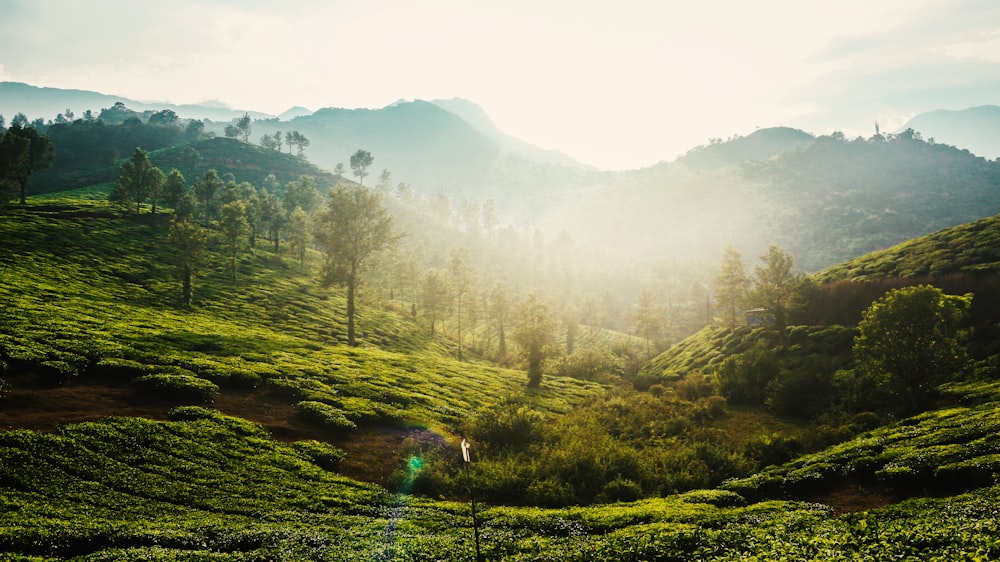
It rained for six of the seven days I was there, in the way it rains in Wayanad in late June, which is to say not as an event but as a condition. The estate is nine acres of pepper trained up silver oak and areca, with coffee underneath and a stream at the bottom that changed character three times during the week. Nothing dried. Nothing was going to dry. This is the correct time to see the place and the worst time to be a farmer on it.
Sheeba runs it with her brother. Their father planted most of the vines in the eighties, during the boom, when pepper was called black gold with a straight face and Wayanad's land prices behaved accordingly. What has happened since is a long, grinding story of price collapse, cheaper imports through the Vietnamese trade, and a fungal disease called quick wilt that does what its name suggests and for which the practical answer is to pull the vine out and burn it.
Pepper is picked green and dried black, and the entire difference is three days of sun the monsoon may not give you.
The harvest here is January to March, so what I was seeing in June was the vines making next season's spikes and the family doing everything else: drainage, mostly. Trenches cut and re-cut on the contour, the standards checked for the weight of a soaked vine, the shade above thinned by hand because too much canopy in a wet year is how you get wilt. Sheeba climbed a silver oak in the rain to lop a branch while I stood underneath holding a plastic sheet over nothing in particular.
The processing is the part I had never thought about. Pepper is picked green, when the spike is just starting to turn, and it is then blanched briefly in hot water and put out to dry, and it wrinkles and turns black over three or four days of sun. Same berry. White pepper is the same berry again, retted in water for a week until the outer skin comes off. “Pepper is picked green and dried black,” she said, “and the entire difference is three days of sun the monsoon may not give you.” They dry on a concrete apron under a polythene tunnel now, which was not an aesthetic choice.
The room I stayed in was in the house — one of two they let, plainly furnished, with a window that I kept open the whole week because the sound was better than anything I could have paid for. Meals with the family: kappa and meen curry, puttu, a chembu thoran, and unlimited quantities of coffee grown thirty metres from the table. I was given a set of dry clothes on the second day without asking and without comment.
What I did not expect was how much of the week was spent talking about money. Not obliquely — directly, with numbers. What a kilo fetched last season, what the same kilo fetched in 2015, what the guest rooms bring in against nine acres, how many families on that road have sold up to people from Bengaluru building weekend houses. Sheeba has no interest in being an emblem of anything. She has a farm with a real problem, and two rooms, and an entirely unromantic view of which of those things is currently subsidising the other.
Somewhere like this?
We list a small number of homes across all seven terrains, from the Himalayas to the cities. Every home is chosen by a person, not an algorithm — pick your dates, pay once, and the stay is confirmed on the spot.