Kainakary, Alappuzha, Kerala
The fisherman who delivers breakfast in Alleppey.
At six-forty a canoe bumps the side of the houseboat, and what happens next is the most efficient supply chain in Kerala.
Six-forty in the morning, moored in a side canal off the Pamba, and there is a solid, unmistakable thud against the hull about a foot from my head. Then another. I got up assuming something had gone wrong. What had happened was that Rajan had arrived, and Rajan does not knock, because the canoe bumping the houseboat is the knock.
In the canoe: a plastic crate of karimeen, the pearl spot that is the fish of these backwaters, five of them, alive; a smaller crate of prawns; a bundle of curry leaves; and a jackfruit that had not been requested and was going to be accepted regardless. He and our cook, Sunil, conducted the entire transaction in about ninety seconds with what appeared to be three words and a lot of pointing, and then he pushed off and went to the next boat.
He does not knock. The canoe bumping the houseboat is the knock.
This is the actual food system of the Alappuzha backwaters and nobody puts it in a brochure. There are, by Sunil's count, five men who work this stretch of water in the mornings, each with a rough territory and a set of boats they call on. They are fishermen first — Rajan sets his nets at four — and the delivery round is what happens on the way back. No orders are placed. No prices are negotiated in front of guests. Whatever the water gave up that morning is what is going to be on the table at one o'clock, and if it was a bad night for karimeen you are having prawns and you will not be consulted.
The karimeen was cooked whole, scored, packed with a masala of shallot, ginger, green chilli and a great deal of black pepper, wrapped in banana leaf and pan-fried until the leaf was black in patches. This is karimeen pollichathu and it is on every menu in Kerala and it is not the same dish when the fish was in the water ninety minutes ago. The difference is in the texture, which stays firm and separates in sheets rather than flaking.
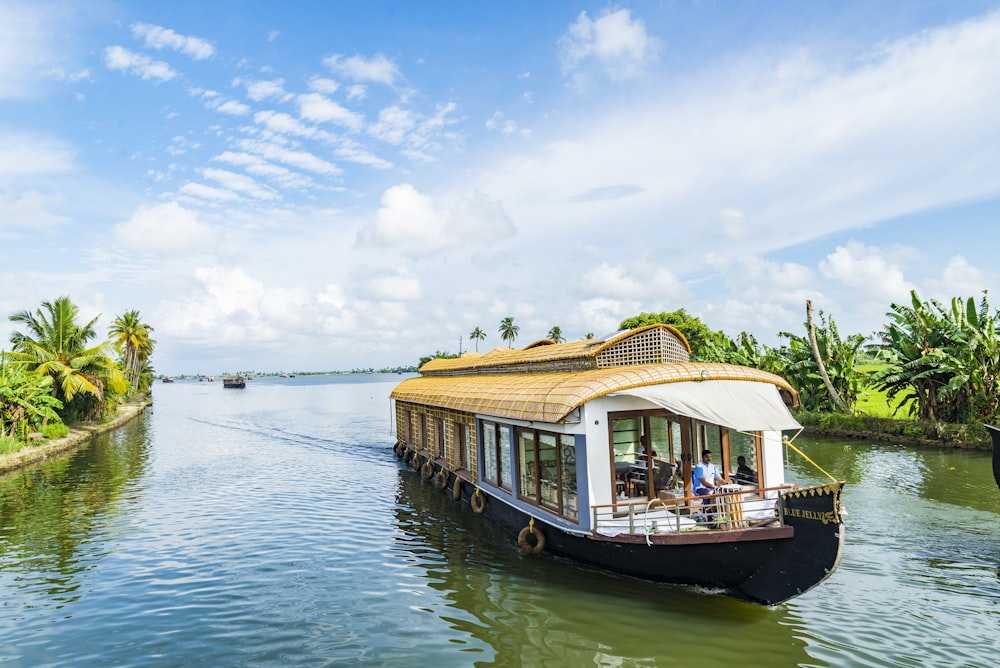
The houseboat itself is one of the small, old ones — a converted kettuvallam, two cabins, a crew of three, and no engine noise for large parts of the day because much of the time it is being punted. The large ones cannot get into these canals at all, which is the whole reason the food is better on the small ones: the small boat is where Rajan's canoe can reach.
On the second morning I got up at five-thirty and went out with him, which cost me nothing and appeared to amuse everybody. The nets come up in an unhurried sequence, the canoe is bailed with a coconut shell roughly every ten minutes, and the sun comes up over the paddy bunds at about six-fifteen and turns the whole system of water and rice and coconut palm into the thing it is famous for being. He does this every day and, from what I could tell, sees it about as often as I see my street.
Somewhere like this?
We list a small number of homes across all seven terrains, from the Himalayas to the cities. Every home is chosen by a person, not an algorithm — pick your dates, pay once, and the stay is confirmed on the spot.