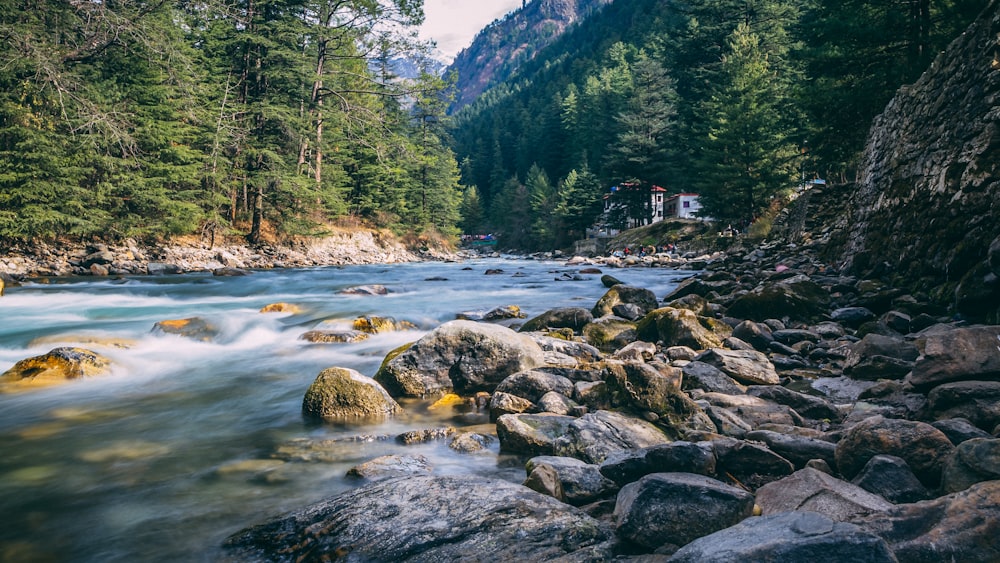
Pin Valley, Himachal Pradesh
Six mornings in Spiti, told in silence.
Six days at a monk's guesthouse at 12,500 feet, where the power goes at nine, the prayer wheel starts before light, and the kitchen garden is the whole business plan.
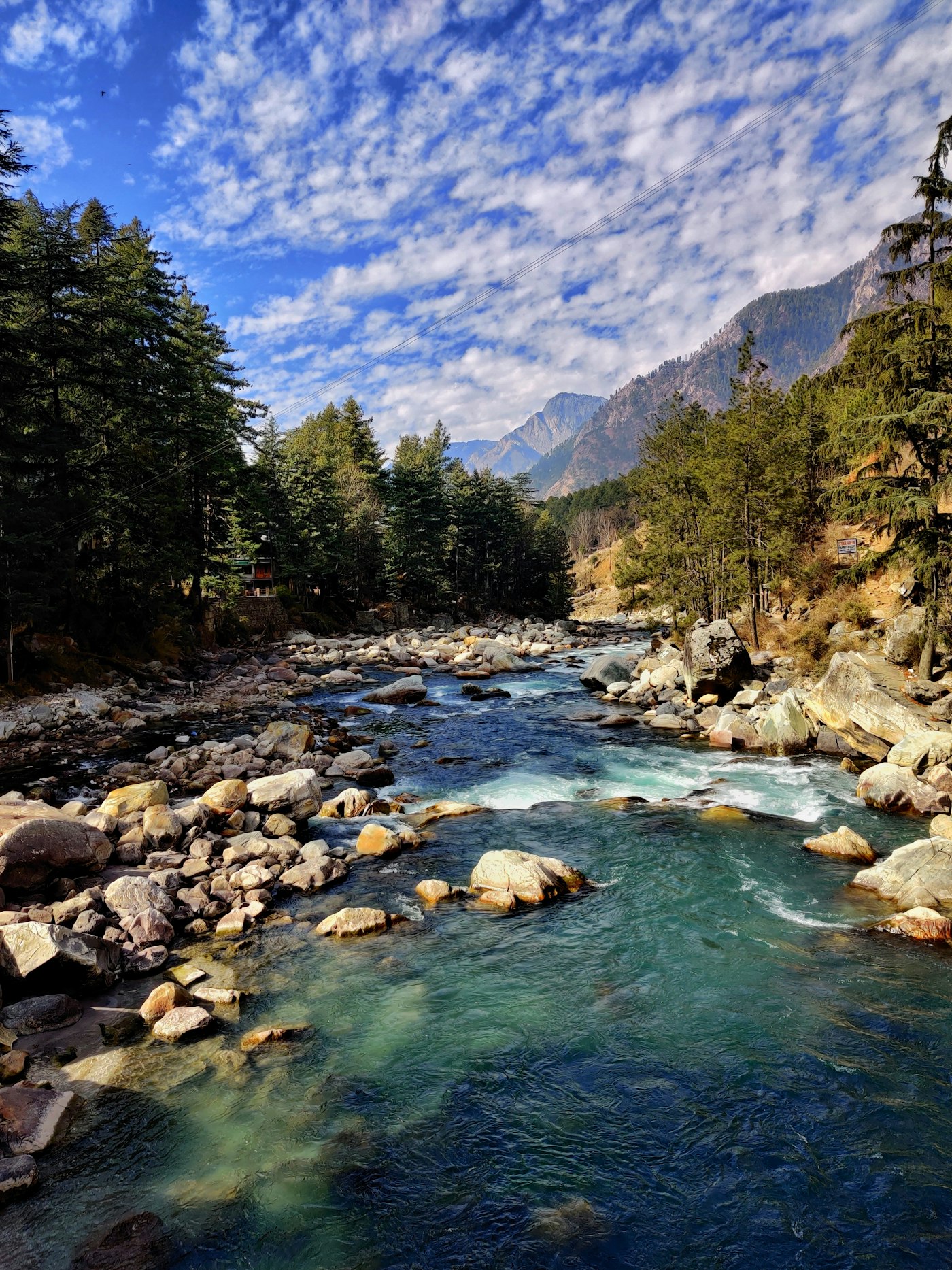
I arrived at Pin Valley in the second week of October, when the harvest was already done and the road to Kaza had shed most of its tourists. The bus dropped me at a crossroads with no phone signal and a hand-painted sign that said “Guesthouse — 200m.” That sign belonged to Tenzin, a monk in partial retirement who had decided, eight years ago, that the best way to keep his monastery's kitchen garden alive was to feed strangers.
The guesthouse is four rooms behind a mud-brick wall, a courtyard with a single apricot tree, and a kitchen that is plainly the reason the rest of the building exists. There is no reception, no register, no rate card. Tenzin showed me a room, pointed at the bucket that is the hot water, and asked whether I ate meat. When I said not much, he looked pleased in a way he tried to hide, and I understood that I had accidentally made his week easier.
The first sip of butter tea is the closest I have ever come to drinking a landscape.
Getting there is a decision rather than a journey. Nine hours from Manali when the Kunzum pass is open, two days from Shimla when it is not, and in either case a final stretch where the road is a shelf cut into scree and the driver's attention is the only safety feature. I did it in October, at the end of the season, on a bus with eleven people and a great deal of cement. Nobody makes this trip casually, and the effect of that on a guesthouse is that everyone who arrives has, in some sense, meant it.
Pin Valley is the side valley — a turn off the Spiti river at Attargu and then twenty-odd kilometres up a gorge that opens, quite suddenly, into something wide and pale and improbable. There are about a dozen villages in it. The national park at the top has snow leopards nobody sees and ibex everybody does. In the last week of October the barley is in, the apricots are dried and stacked, and the valley has begun the long administrative business of shutting down for six months.
On the first night, the temperature dropped to minus four and the generator went off at nine. Tenzin handed me a wool blanket that smelled of pine smoke and said, in the most matter-of-fact Ladakhi English, “Power comes back at six. Or not.” I slept better than I had in years.
Breakfast is butter tea, whether or not you have asked for butter tea. It arrives in a copper pot, salted, faintly rancid to a palate trained on sweet things, and it is the correct drink for a place where the air is thin enough to make a staircase feel like an argument. By the second morning I had stopped comparing it to tea. By the fourth I was drinking three cups and standing in the courtyard to do it.
The garden is the point and it took me two days to understand its scale. Roughly a third of an acre, walled, terraced into four levels, and irrigated by a channel Tenzin opens with a flat stone in the morning and closes with the same stone at night. In it: peas, potatoes, two rows of barley kept for the monastery rather than for eating, cabbages of a size I would not have believed at that altitude, and the apricot tree, which is old and produces, he says, in one year out of three. Everything is grown in a season that runs from late May to early September. Everything eaten between October and May was grown in those fourteen weeks.
On the second afternoon he took me up to Kungri, the monastery the garden belongs to, which is a forty-minute walk on the far side of the river and about six hundred years old depending on who you ask and which fire you count from. He was greeted at the door by a monk of maybe twenty-five with the specific weary affection of someone dealing with an uncle. We were given tea. Nobody explained anything to me and nobody minded that I was there, which I have come to think is the highest compliment a religious building can pay a tourist.
By the third morning I had begun to understand the rhythm of the place. Tenzin woke before light to turn the prayer wheel at the edge of the garden. The sound it made — a low, continuous metallic hum — worked its way into my sleep and eventually became indistinguishable from the sound of the river. This is what Spiti does to you if you stay long enough. It dismantles the categories by which you separate the world from yourself.
On day five, a young doctor from Chandigarh arrived, and the three of us ate dinner together — tsampa porridge and a relish made from dried apricots and green chilli. The doctor was furious at his phone for not working. By the second bowl he had forgotten to be furious. Tenzin watched this with the polite amusement of a man who has seen it many times.
Over six days there were, in total, seven other guests. Two Israeli women at the end of a long overland trip who slept for most of forty-eight hours. A Czech cyclist who had come over Kunzum and was quietly, visibly, in shock. A family from Chandigarh with a child of about six who was the only person in the building unaffected by the altitude and who reorganised the entire social order of the courtyard within an hour of arriving. Tenzin has a book in which he writes names and dates and nothing else — no addresses, no ratings, no comments. Eight years of it. He showed me a page from 2019 and could tell me something about four of the six people on it.
The cold arrives at four in the afternoon, when the sun leaves the valley floor, and it does so with a completeness that is almost theatrical. You go from shirtsleeves in the courtyard to three layers in about twenty minutes. The evenings are therefore in the kitchen, which is the only heated room, around a bukhari fed with dung cake and whatever wood the valley can spare. This is where everything actually happens: the cooking, the eating, the conversation, and, on the fifth night, an hour in which nobody said anything at all and it was not awkward for a moment.
I asked him once, carefully, whether the guests were a business. He thought about it for long enough that I regretted the question. “The garden needs six people to plant and I have two,” he said. “Guests eat what the garden makes. Then there is money for seed.” That is the whole economy of the place, stated once, without a word of romance attached to it. He does not describe himself as a host. He describes himself as someone who has a garden and a spare room and a problem those two things solve between them.
I left on a bus that came an hour late and left forty minutes early. As it ground up the switchbacks out of Pin Valley, I looked back. The guesthouse was already invisible. Just the white mountains, the brown river, and a column of smoke from the kitchen fire. That smoke was breakfast. It was also, I realised, the most honest farewell I have ever received from a place.
Somewhere like this?
We list a small number of homes across all seven terrains, from the Himalayas to the cities. Every home is chosen by a person, not an algorithm — pick your dates, pay once, and the stay is confirmed on the spot.