Hanle, Ladakh
The night the Milky Way leaned in at 14,000 feet.
India's darkest sky reserve, a homestay that turns its lights off at nine because the neighbours are astronomers, and the specific shock of seeing a shadow cast by starlight.
Hanle is two hundred and seventy kilometres from Leh and the last ninety of them take four hours. There is a permit. There is a stretch after Nyoma where the road is a suggestion the plateau has agreed to for now. You arrive at fourteen thousand feet feeling thick-headed and mildly stupid, and everyone tells you to sleep and do nothing on the first day, and everyone is right.
The village is about a hundred houses under a monastery on a hill, in the middle of the Changthang, and since 2022 it has been the centre of India's first dark sky reserve. That designation is not decorative. The houses run amber lights, shielded and pointed down. Curtains are drawn after dark by habit. Sonam, whose family I stayed with, switches off the outside light at nine every night without being asked, because the observatory is four kilometres up the ridge and the arrangement between the village and the telescope is a real and rather touching thing.
There is no word in my language for a sky that has weight, so I stopped looking for one.
I went out at eleven on the second night, alone, about two hundred metres from the house so the last of the amber was behind a wall. It takes a full twenty minutes for your eyes to do what they can do, and the temptation to look at a phone during those twenty minutes and ruin it is enormous. I sat on my hands.
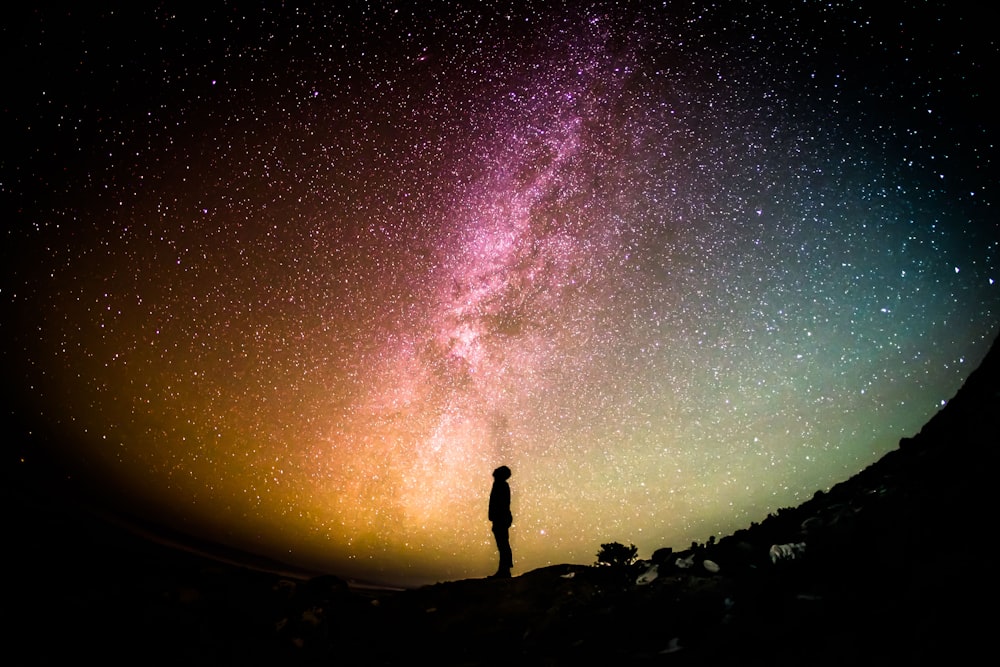
What happened after twenty minutes I have been trying to describe since. The Milky Way at Hanle in September does not read as a band of haze. It reads as structure: the dust lanes are unmistakably dark against the light, the core toward Sagittarius has depth to it, and the whole thing is bright enough to be the dominant light source in the landscape. I could see the outline of the ridge. I could see my own hands. At one point I moved and there was a shadow on the ground, faint but entirely real, cast by starlight. There is no word in my language for a sky that has weight, so I stopped looking for one and just stood there for an hour and a half getting extremely cold.
The homestay is four rooms with bukhari stoves, thick quilts, and a shared bathroom that at three in the morning constitutes a genuine test of character. Dinner is thukpa or rice and dal, at seven, in the kitchen where everyone sits. Sonam's mother runs it and speaks no Hindi and no English and communicated with me entirely through the medium of putting more food on my plate. There is one shop. There is intermittent BSNL signal at one particular corner that the whole village knows about and everyone stands at, in a queue, like a bus stop.
A practical note, because this is the part people get wrong: the sky is the reason to come, and the sky is only available if you have acclimatised. Two nights minimum in Leh first, ideally three, and then a day at Hanle doing nothing. Every person I met who had driven up in one push spent their one clear night in bed with a headache. The Changthang gives you very little for free, and it is entirely indifferent to how far you have come.
Somewhere like this?
We list a small number of homes across all seven terrains, from the Himalayas to the cities. Every home is chosen by a person, not an algorithm — pick your dates, pay once, and the stay is confirmed on the spot.