Rajmachi, Maharashtra
Chasing the monsoon across the Sahyadris.
Four Maratha forts in nine days of rain, and an argument with a caretaker about what a fort is actually for.
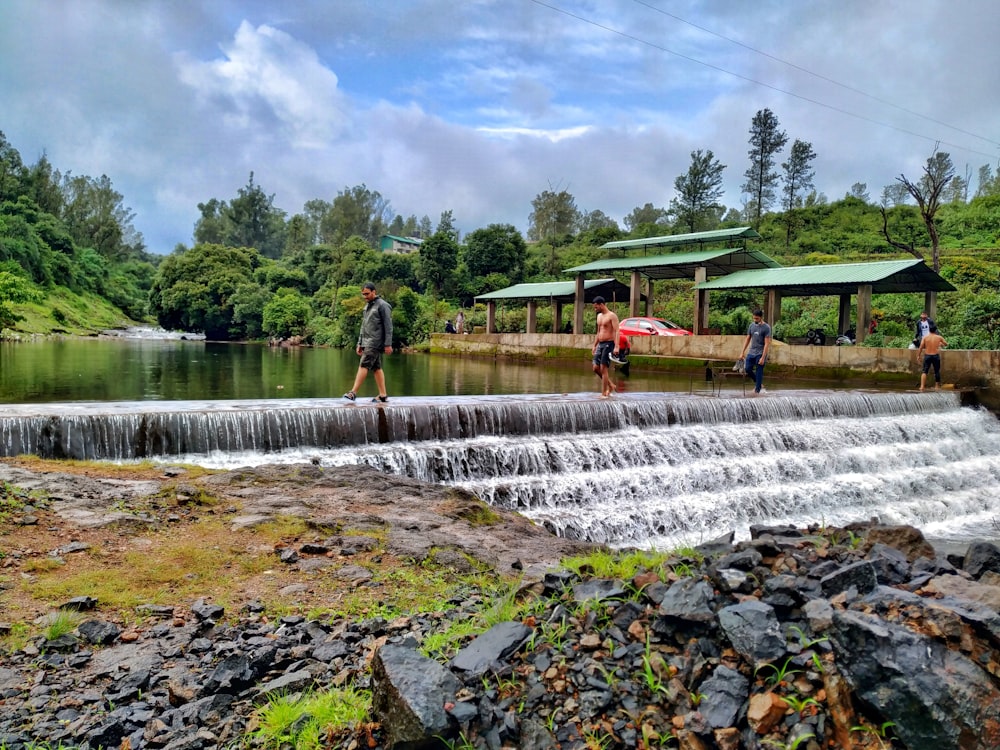
I have lived in Pune for nineteen years and had somehow never done the obvious thing, which is to go up into the Sahyadris in the middle of the monsoon and stay there. The reasons are the ordinary ones. It is wet. The roads are bad. Everyone you know goes to Lonavala for a weekend, complains about the traffic, and comes back. So in July I took nine days and four forts — Rajmachi, Korigad, Tikona, Visapur — and stayed in villages at the bottom of each rather than driving up and down from the city.
The first thing the rain does is take away the view, which is the thing everyone comes for, and the second thing it does is give you something better. Standing at the Shrivardhan bastion at Rajmachi in a cloud so dense I could not see the Manaranjan fort five hundred metres away, I found the caretaker's son unimpressed by my disappointment. The fort was built to watch for armies, I said. In July it can barely see its own gate. He pointed out, reasonably, that in July there were no armies. Nobody campaigned in the monsoon. The forts were built by people who knew exactly what four months of this was like and built for the other eight.
The fort was built to watch for armies. In July it can barely see its own gate.
That reframing stayed with me for the rest of the trip. These are not scenic ruins that happen to be wet; they are structures with a seasonal logic, and the monsoon is the season they were designed to sit out. The cisterns at Korigad — rock-cut, still holding water, still clean — make sense the moment you watch how much falls in an hour. The stepped catchments, the angled drains cut into bare basalt, the placement of the granaries on the high side: all of it is a rainwater argument you cannot read at all in February.
I stayed in Udhewadi, the village inside the Rajmachi saddle, in a room in a family house with a tin roof that made conversation impossible for about twenty minutes at a time. Meals were bhakri, pithla, and a thin dal, cooked on a chulha, eaten sitting on the floor. The family — the Kondhalkars — take walkers through the season, six or eight at a time, mostly Pune weekenders who arrive on Saturday having wildly underestimated the last four kilometres.
There is a version of this that romanticises the hardship, and I want to be careful. Nine days of monsoon in a hill village is nine days of everything being damp. Your boots do not dry. The leeches at Visapur are not a charming detail. Twice the road below Tikona was under enough water that I sat in a tea shop for three hours with no idea whether I would be sleeping in a village or a car. That is the trip. If that is unacceptable, the forts are magnificent in November and you should go then.
But I understood something in the cloud at Rajmachi that nineteen years of clear-weather day trips had not taught me. These places were not built for looking at. They were built for waiting in — for holding a position through a season in which nothing could move, until the ground dried and the world started again. Standing there soaked, unable to see anything, waiting for a cloud to shift so I could photograph a wall, I was doing more or less exactly what the fort was for.
Somewhere like this?
We list a small number of homes across all seven terrains, from the Himalayas to the cities. Every home is chosen by a person, not an algorithm — pick your dates, pay once, and the stay is confirmed on the spot.